How Reverse Osmosis Works
Reverse osmosis pushes pressurised water through a semi-permeable membrane whose pores are approximately 0.0001 microns, small enough to block dissolved salts, heavy metals, fluoride, nitrates, and pharmaceutical residues. A rejection stream carries the contaminants to the drain, while purified water is collected on the other side.
How Ultrafiltration Works
Ultrafiltration uses a hollow-fibre membrane with pores around 0.01 microns. It physically blocks bacteria, protozoan cysts, microplastics, and suspended particles, but dissolved substances including salts and heavy metals in ionic form pass through because they are smaller than the pore size.
Side-by-Side Comparison
- Pore size: RO 0.0001 um vs UF 0.01 um
- TDS reduction: RO 90-99% vs UF negligible
- Retains minerals: RO no (unless remineralised) vs UF yes
- Requires electricity: RO yes (pump) vs UF no
- Produces wastewater: RO yes vs UF no
- Best for: RO high-TDS or contaminated source water; UF low-TDS municipal water with microbial risk
Which Is Right for a Kuwait or GCC Home?
Most Kuwait homes draw blended desalinated and brackish water that travels through older building pipes. The common issues are elevated TDS, chlorine residuals, and pipe-derived contaminants. In this context, a reverse osmosis system with remineralisation is usually the stronger choice because it addresses dissolved contamination that ultrafiltration cannot reach.
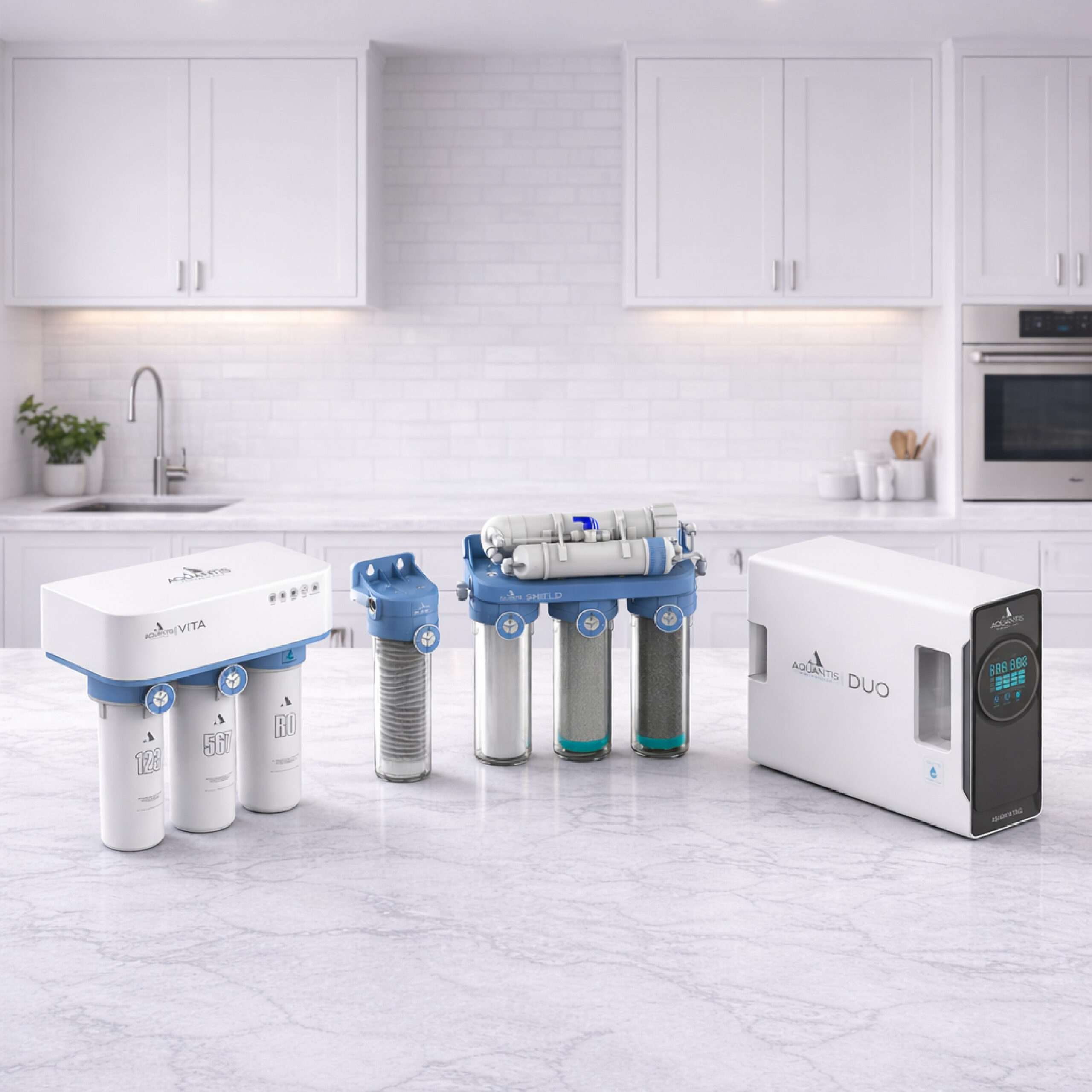
Aquantis VITA (7-stage, compact) and DUO (8-stage with UV) both use RO membranes with a remineralisation stage that restores bio-available calcium and magnesium after purification.
When Ultrafiltration Makes Sense
If your source water already has a TDS below 200 ppm, is low in heavy metals, and your main concern is microbial safety, a UF system is simpler, needs no electricity, and wastes no water. Aquantis SHIELD is positioned for this scenario, a quiet, electricity-free upgrade over a basic carbon filter.
Frequently Asked Questions
Is RO water safe to drink every day?
Yes, when the system includes a remineralisation stage. Flat, demineralised water is safe but less palatable and provides no mineral contribution.
Does ultrafiltration remove chlorine?
UF membranes do not remove chlorine. Systems that use UF pair it with an activated carbon stage for chlorine and taste.
How much water does an RO system waste?
Older RO systems rejected 3-4 litres per litre of purified water. Modern systems like Aquantis DUO use efficient membranes that bring this ratio closer to 1:1.
Can I combine RO and UF?
Some premium systems use both: UF as a pre-filter to protect the RO membrane and extend its life.
The Bottom Line
RO is the more protective technology for most GCC households. UF is a sensible option when source water is already low in dissolved solids and the primary concern is microbial. A five-minute water test at your tap will tell you which category you fall into.
Ready to Know What’s in Your Water?
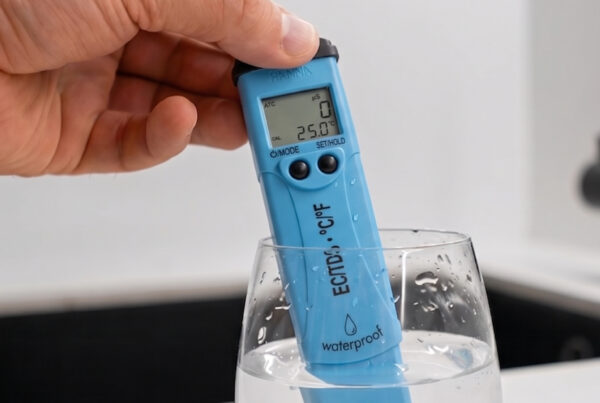
Book a free in-home water test with SuperNatural. A technician will measure your TDS, chlorine, and hardness on the spot, and recommend the Aquantis system that fits your home and budget. Installments available starting 13KD.
Visit supernaturalco.com/ to book your free water test today.