What is TDS?
TDS stands for Total Dissolved Solids. It is the total concentration of dissolved substances in water, including minerals, salts, and small amounts of organic matter. It is typically measured in milligrams per liter (mg/L) or parts per million (ppm).
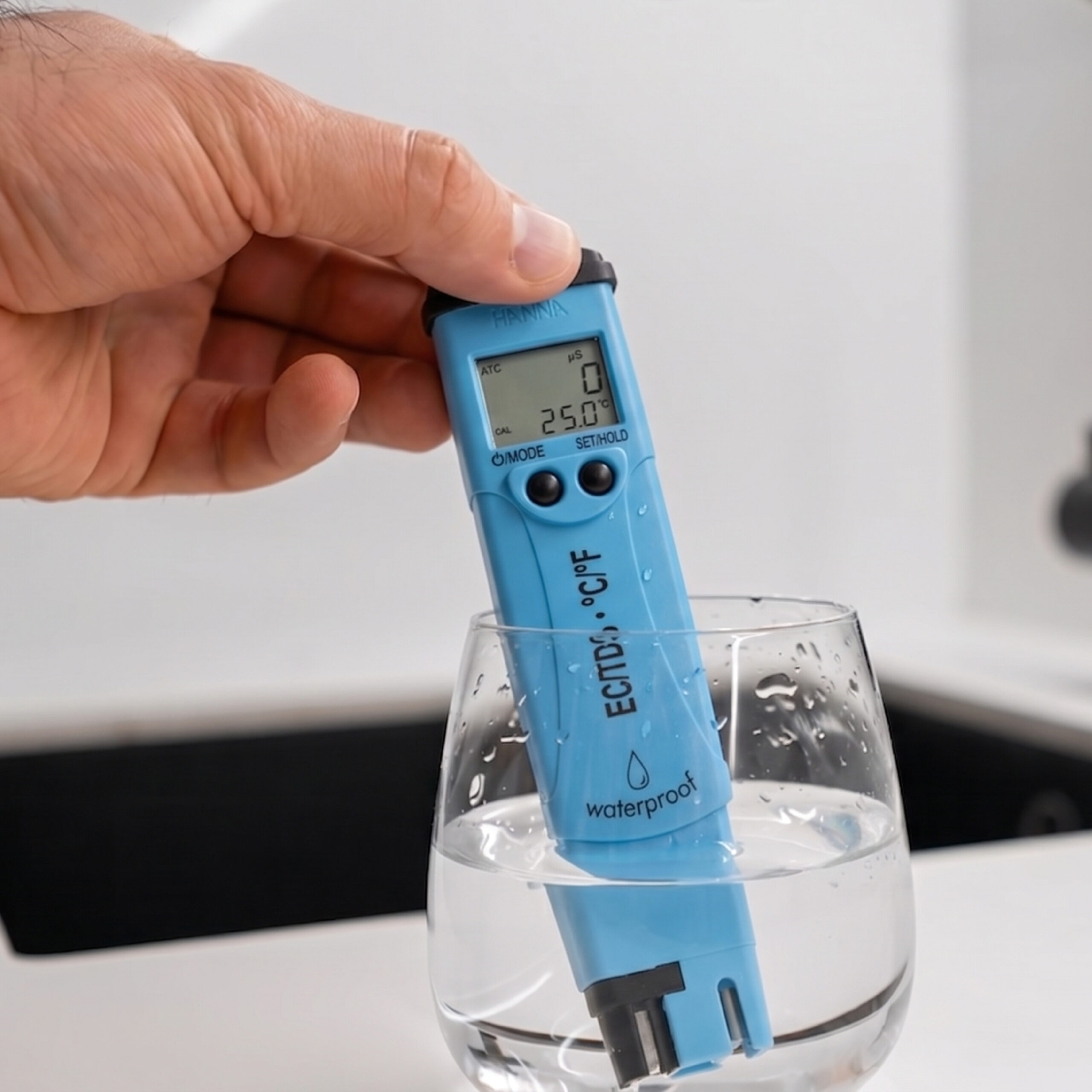
A TDS meter measures the electrical conductivity of water and estimates the dissolved content from it. It is a useful screening tool, but it does not identify which substances are present – only the total load.
What is a Safe TDS Level for Drinking Water?
The World Health Organization publishes the following general guidance for palatability of drinking water:
- Below 300 ppm – Excellent
- 300-600 ppm – Good
- 600-900 ppm – Fair
- 900-1,200 ppm – Poor
- Above 1,200 ppm – Unacceptable
In Kuwait and much of the GCC, tap water is desalinated seawater blended with brackish groundwater. By the time it reaches a residential faucet, especially in older buildings, the TDS reading at the point of use can vary meaningfully from the value at the treatment plant.
What TDS Does Not Tell You
A low TDS reading is not a guarantee of safe water. TDS cannot detect:
- Chlorine and chloramine residuals
- Bacteria, viruses, or microbial contamination
- Heavy metals such as lead or copper picked up from plumbing
- Volatile organic compounds
This is why TDS should be read alongside a broader water quality test, not as a standalone verdict.
How to Test TDS at Home
A handheld digital TDS meter costs under 10 KD and gives a reading in seconds. Fill a clean glass with cold tap water, immerse the probe, and record the value. Repeat at different faucets – kitchen, bathroom, and shower – because readings often differ based on pipe material and distance from the main line.
When TDS Indicates You Need Purification
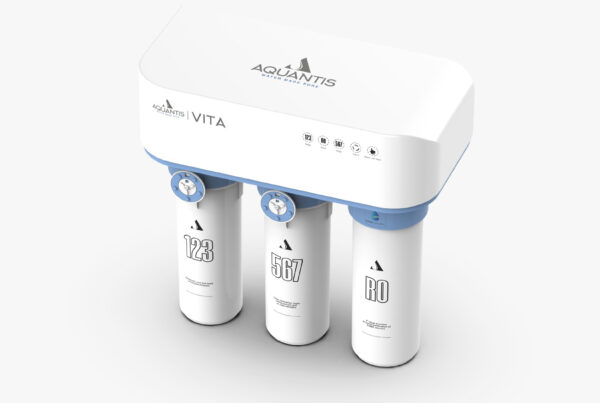
If your household reading consistently sits above 500 ppm, or if you notice taste changes, scale on kettles, or spotting on glassware, a point-of-use purification system is worth considering. Reverse osmosis systems like Aquantis VITA and DUO reduce TDS dramatically, while remineralisation stages restore bio-available calcium and magnesium after filtration.
Frequently Asked Questions
Is low TDS water healthy?
Very low TDS water (below 50 ppm) can taste flat and may be low in beneficial minerals. That is why premium purification systems include a remineralisation stage after reverse osmosis.
What is a good TDS level in Kuwait?
Municipal desalinated water in Kuwait typically leaves the plant at 100-250 ppm. Readings above 400 ppm at your tap usually indicate pickup from building plumbing or storage tanks.
Does boiling water reduce TDS?
No. Boiling kills microbes but actually concentrates dissolved solids as water evaporates.
How often should I check my TDS?
Once a month is sufficient for a stable home. Test weekly if you have just moved, changed filters, or noticed a taste change.
The Bottom Line
TDS is a useful first signal, not a full diagnosis. Pair a monthly TDS reading with a professional water test and you will know exactly what your family is drinking, and what to do about it.
Ready to Know What’s in Your Water?
Book a free in-home water test with SuperNatural. A technician will measure your TDS, chlorine, and hardness on the spot, and recommend the Aquantis system that fits your home and budget. Installments available starting 13KD. Visit supernaturalco.com/ to book your free water test today.