What Hard Water Actually Does Inside Your Appliances
Hard water contains elevated levels of dissolved calcium and magnesium. When that water is heated or evaporates, the minerals precipitate out and form a hard crust, limescale, on heating elements, valves, and internal surfaces.
The Real Cost, Appliance by Appliance
Water heaters
A scaled heating element must work longer to heat the same volume of water. Industry studies have measured efficiency losses of 25-48% on heavily scaled units. In Kuwait’s climate, where water heaters run year-round, that translates directly into a higher electricity bill.
Dishwashers
Scale clogs spray arms and heating coils. Glassware comes out cloudy, wash cycles lengthen, and the motor eventually fails earlier than its rated life.
Washing machines
Heating elements scale first. Detergent performance drops because calcium ions bind with surfactants. Textiles feel rough, colours fade faster, and the drum bearings wear sooner.
Coffee machines and kettles
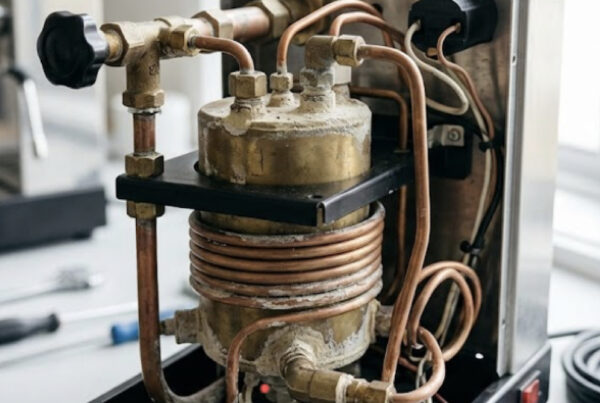
Narrow internal channels scale in months, not years. Espresso machines lose pressure consistency; kettle elements burn out. Most manufacturers exclude scale damage from warranty coverage.
Ice makers and water dispensers
Scale narrows water lines, reduces ice production, and creates cloudy cubes that melt faster.
The Cumulative Household Math
A typical Kuwait family with a water heater, dishwasher, washing machine, kettle, and espresso machine will spend between 150 and 400 KD per year on scale-shortened appliance life, repair callouts, higher electricity use, and replacement parts. Over five years, that figure often exceeds the one-time cost of a whole-home purification or point-of-use system.
How to Prevent the Damage
- Install a sediment pre-filter where supply enters the building
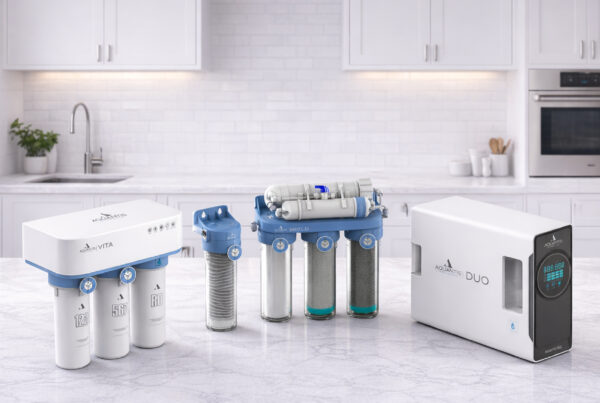
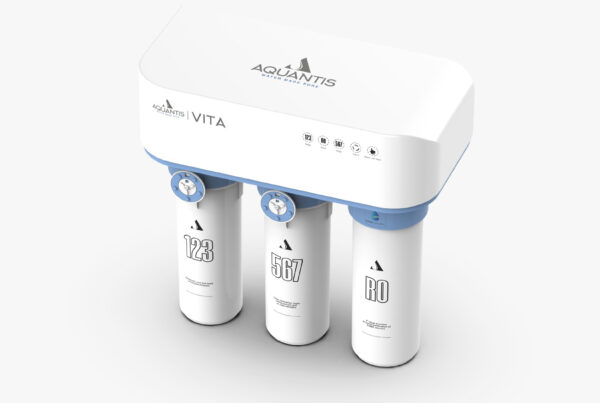
- Use a point-of-use purification system like Aquantis VITA or DUO for drinking and cooking water, which protects kettles, coffee machines, and ice makers
- Descale appliances quarterly with food-grade citric acid
- Service rooftop storage tanks twice a year
Frequently Asked Questions
How do I know if my water is hard?
White crust on the kettle, soap that will not lather, spots on glassware, and a TDS reading above 500 ppm all indicate hardness.
Does a water filter soften water?
Reverse osmosis systems remove most hardness minerals. Dedicated ion-exchange softeners are an alternative for whole-home hardness.
Can I descale with vinegar?
Yes, white vinegar works for kettles and coffee machines, but manufacturer-specified descalers are safer for washing machines and dishwashers.
Will filtered water extend appliance life?
Significantly. Manufacturers routinely cite 30-50% longer life on appliances fed with low-hardness water.
The Bottom Line
Limescale is the slowest, most expensive form of appliance damage there is. A modest upfront investment in purification pays for itself in reduced electricity, fewer repairs, and appliances that last the number of years the manufacturer promised.
Ready to Know What’s in Your Water?
Book a free in-home water test with SuperNatural. A technician will measure your TDS, chlorine, and hardness on the spot, and recommend the Aquantis system that fits your home and budget. Installments available starting 13KD. Visit supernaturalco.com/ to book your free water test today.