Why Coffee Machines Die Young
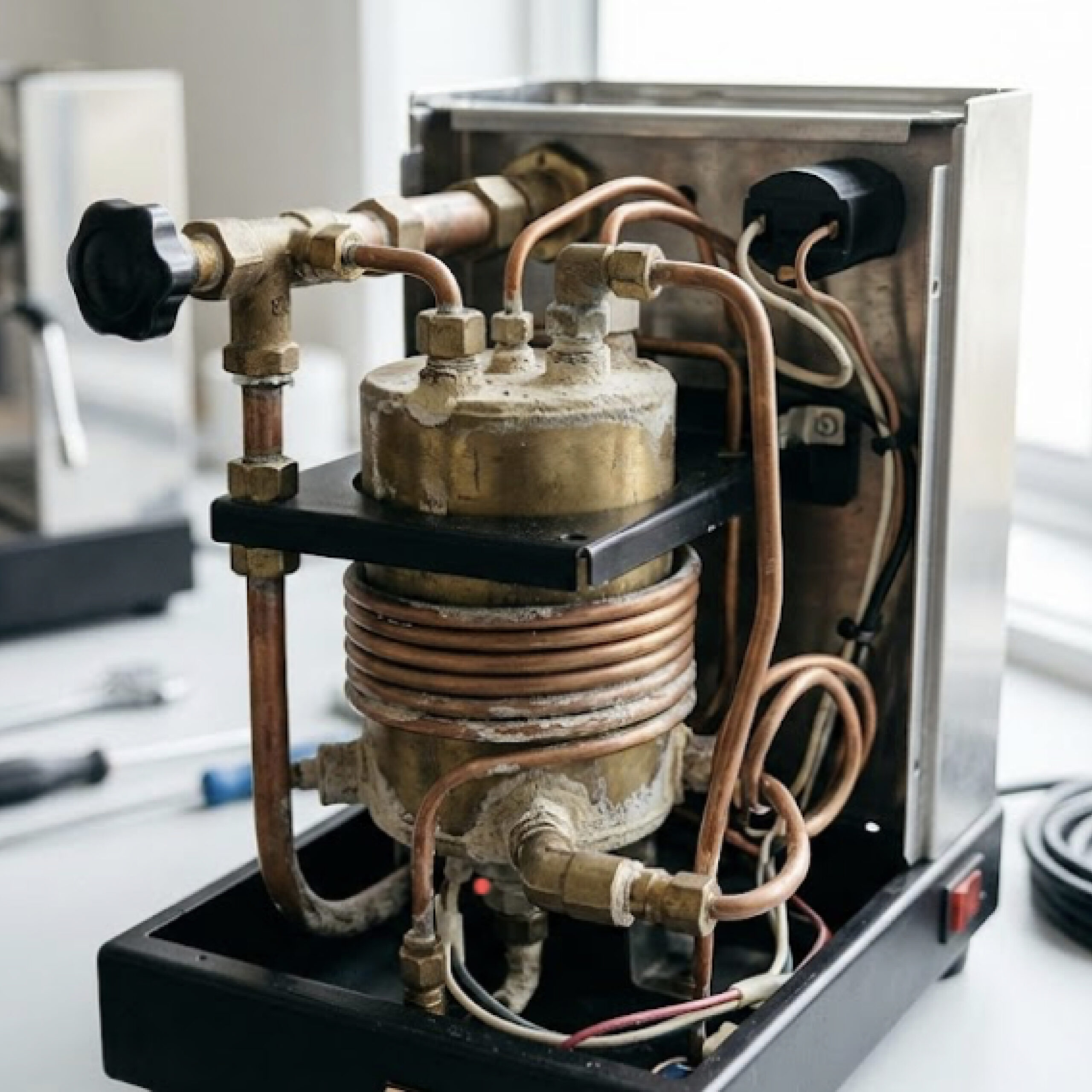
A home espresso machine has thermal blocks, boilers, solenoid valves, and sub-millimetre water channels. Each one is a perfect environment for calcium and magnesium to precipitate out of hot water. A machine that should last ten years often fails within three in a hard-water household, and the repair invoice usually reveals the same diagnosis: scale.
The Specific Failure Points
Heating elements
A 1mm layer of limescale on a heating element reduces heat transfer efficiency by roughly 10%. The element works harder, runs hotter, and eventually burns out.
Solenoid valves
Small scale particles get caught in valve seats. The machine either refuses to start, leaks continuously, or throws pressure errors.
Pump pressure
Vibratory pumps lose efficiency as internal passages narrow. Espresso pulls become weak, crema thin, and shots inconsistent.
Steam wands and milk systems
Scale is particularly aggressive inside steam circuits. Wands clog, frothers fail to produce microfoam, and automatic milk systems need constant disassembly.
Why Warranty Won’t Save You
Read the fine print on any premium coffee machine warranty and you will find the same clause: damage caused by scale, descaling neglect, or use with non-recommended water is excluded from coverage. Manufacturers know scale is the leading failure mode, and they know most homeowners will not win that argument.
What Works Better Than Descaling
Regular descaling with citric acid is a rescue operation, not a prevention strategy. Every descaling cycle is slightly abrasive to seals, gaskets, and internal coatings. Prevention is always cheaper and safer than repair:
- Feed the machine purified water from a point-of-use system
- Use a small inline scale filter if refilling a tank
- Empty and dry the water tank weekly to reduce biofilm and taste transfer
- Run a purge cycle each morning before the first shot
The Same Rule Applies to Every Kitchen Appliance
- Kettles – element replacement every 18 months in hard water vs 5+ years with filtered
- Ice makers – filtered water gives clearer, slower-melting ice with no mineral taste
- Dishwashers – no cloudy glassware, longer motor life, better detergent performance
- Steam ovens and combi-ovens – scale destroys boiler systems; most manufacturers mandate filtered water
The Right Water for a Kitchen That Takes Coffee Seriously
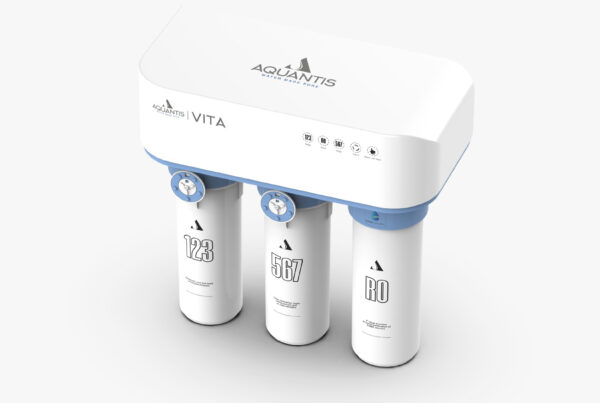
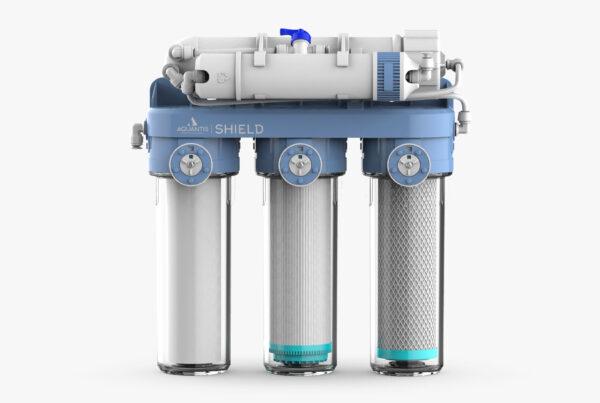
A Specialty Coffee Association target TDS for brewing coffee is 75-250 ppm with low hardness. Reverse osmosis systems with remineralisation, like Aquantis VITA and DUO, can hit this range precisely. The flavour difference in a single shot is immediate: clearer acidity, rounder body, longer aftertaste.
Frequently Asked Questions
Can I just use bottled water for my coffee machine?
It works, but it is wasteful and inconsistent. Mineral content varies by brand, and summer storage in plastic can transfer taste.
Is RO water bad for espresso?
Pure RO water is too soft and can under-extract. Remineralised RO water, calibrated to SCA range, is ideal.
How often should I descale?
With hard water, every 2-3 months. With filtered water, once or twice a year as maintenance, not rescue.
Does a water filter jug work?
It helps, but carbon-only jugs do not remove hardness minerals, which is the main driver of scale.
The Bottom Line
Scale is the slow, expensive way to lose a good kitchen. A one-time purification upgrade protects every machine downstream for years, and it is cheaper than replacing any one of them.
Ready to Know What’s in Your Water?
Book a free in-home water test with SuperNatural. A technician will measure your TDS, chlorine, and hardness on the spot, and recommend the Aquantis system that fits your home and budget. Installments available starting 13 KD.
Visit supernaturalco.com to book your free water test today.