The Problem Nobody Talks About
Water utilities are held to strict standards for what leaves the treatment plant. No utility in the world is held accountable for what happens inside a private building’s pipes. That gap, between the municipal line and your glass, is the Last Mile.
What Happens Inside Aging Pipes
Corrosion and rust
Iron and galvanised steel pipes corrode over time. The oxide layer flakes off into the water stream, producing the reddish-brown sediment that collects at the bottom of kettles and toilet tanks.
Biofilm formation
A thin microbial community forms on the interior walls of any pipe that sees reduced flow or warm periods. Biofilms shelter bacteria from residual chlorine and release them back into the water during flow events.
Heavy metal leaching
Older plumbing can contain lead solder joints or copper piping. Chemical conditions in stagnant water, particularly in rooftop tanks exposed to heat, accelerate leaching of these metals into the water.
Sediment accumulation
Fine particulates settle in low points and get re-suspended during pressure changes, delivering a visible slug of sediment to faucets downstream.
Why the Problem Is Worse in the GCC
- Rooftop tanks exposed to 50C+ summer temperatures accelerate chemical reactions
- Much of the regional building stock is 20-40 years old with original plumbing
- Desalinated water can be slightly more aggressive to metal pipes than groundwater
- Long stagnation in unoccupied summer homes compounds biofilm growth
The Visual Evidence
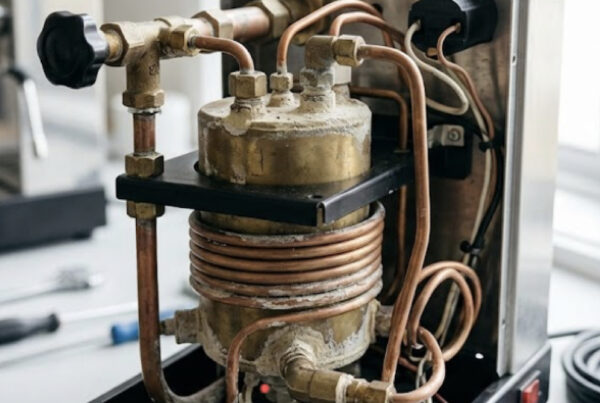
If you have ever seen a section of old pipe cut open during a renovation, you have seen the Last Mile problem. The inside of a 20-year-old pipe rarely looks like the inside of a new one. That is the surface your drinking water flows across, every second of every day.
Why Utility-Level Treatment Cannot Solve This
A water treatment plant can only guarantee quality at its boundary. The pipes, pumps, and tanks between that boundary and your tap are private infrastructure, owned by the building, often uninspected, and almost never replaced until they fail catastrophically.
The Point-of-Use Answer
The only way to control Last Mile contamination is to treat water as close as possible to where it is consumed. That is the design principle behind the Aquantis range:
- Aquantis PURE – point-of-use protection at any faucet,
- Aquantis SHIELD – multi-stage purification under the sink, no electricity required
- Aquantis VITA – 7-stage RO with remineralisation for the kitchen tap
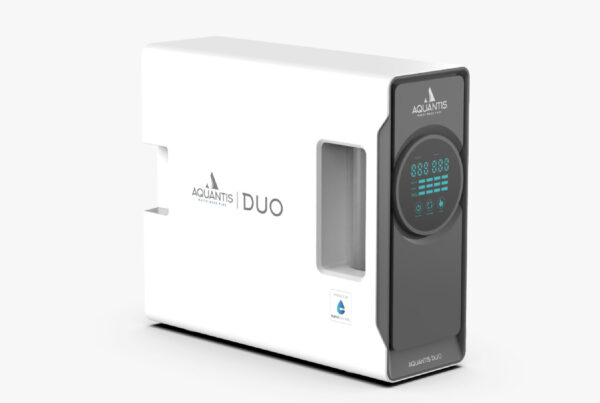
- Aquantis DUO – 8-stage with UV for the highest level of final-mile protection
Frequently Asked Questions
How old are Kuwait’s water pipes?
Distribution pipes vary widely. Residential areas developed in the 1970s and 1980s still have substantial stock of original internal plumbing.
Can I see Last Mile contamination?
Sometimes. Rust-coloured water after a supply interruption, cloudy water from the first morning pour, or visible sediment in a glass are all signs.
Does running the tap for a minute help?
It flushes the stagnant volume sitting in your pipes. It does not address what the water will pick up tomorrow, or on the next draw.
Is replacing the pipes the answer?
Ideal but rarely practical. Building-wide repiping costs far more than a lifetime of point-of-use purification.
The Bottom Line
Government water is clean. The problem is the fifty metres of pipe between it and your family. Own that last mile, and you own the quality of every glass.
Ready to Know What’s in Your Water?
Book a free in-home water test with SuperNatural. A technician will measure your TDS, chlorine, and hardness on the spot, and recommend the Aquantis system that fits your home and budget. Installments available starting 13 KD.
Visit supernaturalco.com to book your free water test today.